12-Day Xinjiang Autumn Photo Tour — 2026 Trip Report
Every October the far northwest does something extraordinary: the larches around Kanas turn gold, the rivers run a glacial blue, and the light goes low and warm for hours. Our 2026 autumn departure ran the full twelve days from the Junggar Basin to the Altai, and this is the trip report — what we shot, when, and the small decisions that made the frames.
Why October, and why this window
The colour peaks are narrow — usually the second and third week of October in Kanas. Go a week early and the larches are still green at the tops; a week late and the first snow has already flattened the gold. We time the departure to that window and build in buffer days, because a cold snap can move the peak by five days either way. The lesson for anyone planning their own China photography tour: book the dates around the foliage, not the other way round.
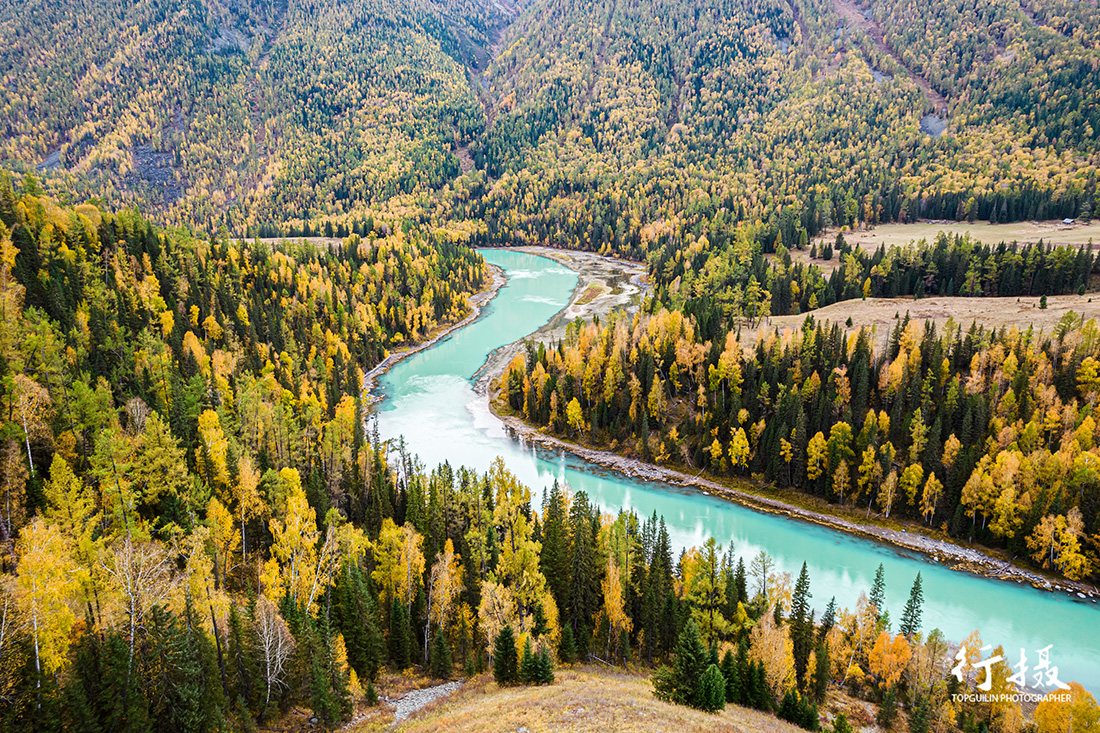
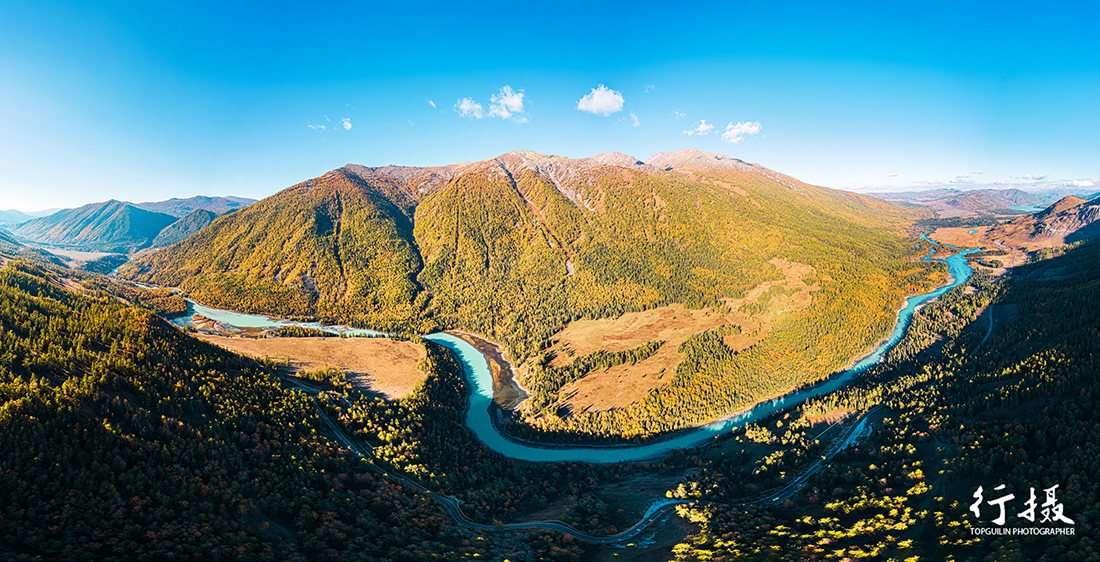
Kanas: the golden hour that lasts all afternoon
Kanas is busy, but the light is forgiving. We worked Shenxian Bay for mist at dawn, Moon Bay as the sun cleared the ridge, and Wolong Bay last when the light was flat enough to hold detail in both forest and sky. The real trick is patience: each viewpoint is a five-minute walk from a shuttle stop, so the day is about waiting, not walking. Guests who normally shoot at ISO 800 instinctively dropped to 100–200 here — the stillness lets you.
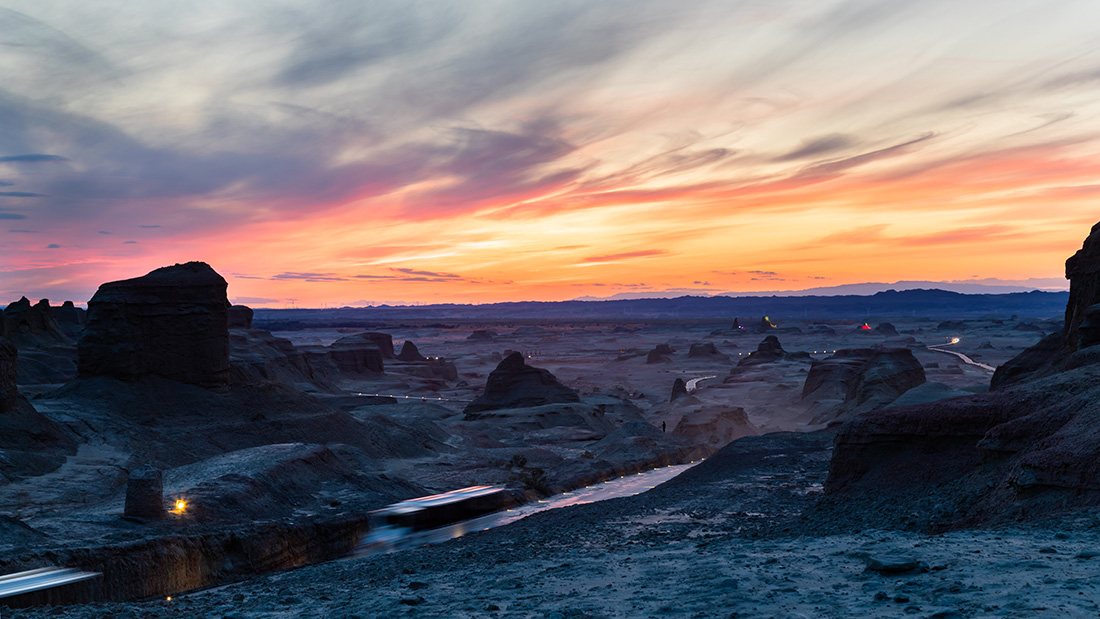
Urho Ghost City at dusk
The yardangs only become themselves in the last ninety minutes of daylight. We scouted the formations before the light dropped, then worked the low raking sun to throw each ridge its own shadow, compressing them into a skyline with a 70–200mm. After sunset there is a reliable twenty minutes of blue hour when the shapes flatten into silhouette and the sky goes cobalt — the frame most people miss because they have already walked back to the car.
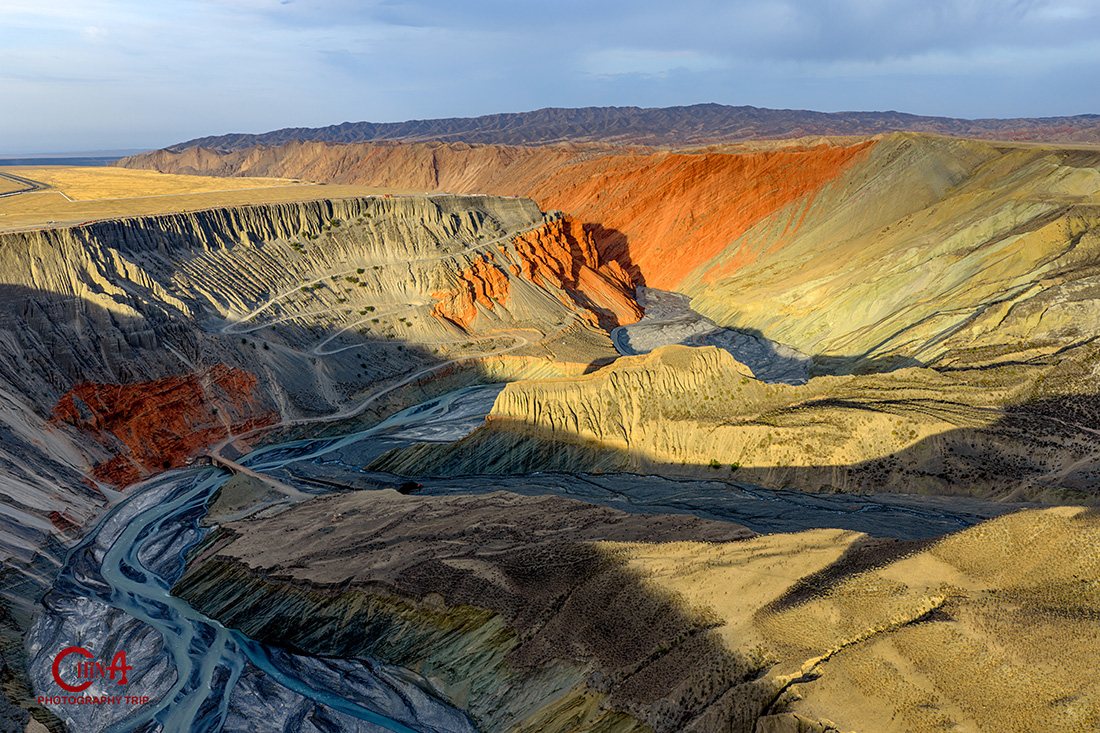
Anjihai Grand Canyon
On the drive back east we stopped at Anjihai (Hongshan) Grand Canyon, where meltwater has sawn a kilometre-wide gash through red sandstone. From the rim the river below is a braided silver thread; the cliffs opposite catch the last direct sun about fifteen minutes before the valley floor goes into shadow. That contrast — lit walls, dark river — is the shot, and it lasts maybe ten minutes.
What our guests took home
By the end of twelve days the group had a full card of larches, dunes, blue hours and canyon strata — and, more importantly, the timing habits to repeat it anywhere. If you were on this departure and want to revisit the shots, head back to the Journal and type your name into the search bar — it will take you straight to this report.
