From the Spot
Frames from Li River
Tap to enlarge.

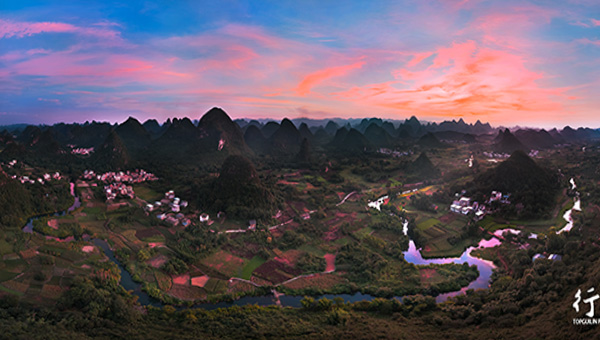

When the day's tours have gone, the Li River belongs to the light. Sunset paints the karst gold, rafts turn to silhouettes, and the blue hour brings out the cormorant fishermen's lanterns.
Xingping bend — Dawn light from the east; the same bend reads completely differently in soft morning colour.
West-bank sandbars — Warm sidelight on the peaks and golden water; rafts returning make perfect silhouettes.
Riverside platform — The cormorant-fisherman setup with a glowing lantern is the signature blue-hour frame here.
In the evening the Li River empties of tour boats and belongs again to the people who live and photograph along it. The same Xingping bend that is crowded at dawn becomes a quieter, warmer place as the light fades — a working river of bamboo rafts and fishing families, with the karst walls now catching the sun from the opposite side of the sky.
At sunset the cliffs glow amber and the surface of the river turns to gold. This is also the best time for the old cormorant-fisherman scene: a single raft, a bird on its perch, and a small oil lamp that becomes a warm point of light as the day goes dark. Stay a little longer and the sky turns deep blue — the lamp is lit, the peaks go navy, and the water settles into a smooth, mirror-like stillness.
Mar-May. Soft light, some mist lingering into dusk.
Jun-Aug. Long, warm evenings; watch afternoon storms.
Sep-Nov. Clearest sunsets and clean afterglow.
Dec-Feb. Early sunset, crisp blue hour.
How a sunset session at Li River usually unfolds with our guide.
Reach the west-bank platform and compose the bend.
Golden hour begins; shoot warm karst and rafts.
Sun touches the ridge; capture silhouettes.
Afterglow and blue hour; start the cormorant setup.
Lantern frame in deep blue; wrap.
Tap to enlarge.
We time transport, permits and platforms around the light so you're on the spot before it breaks.
Plan My Guilin Trip →