Chasing Rime Ice on Tianmen Mountain
Twice a winter, sometimes three times, Tianmen Mountain puts on the show that makes photographers cancel flights and rebook cable cars: rime ice. Every pine branch, every rail, every cable of the guardrails glazed in white feathers — the 99 bends of Tongtian Avenue stitched in frost, the cliff walkways edged in crystal. Chinese photographers plan whole trips around these weeks. Here is how we work them.
How rime happens (and how to know tonight's the night)
Rime forms when supercooled cloud or fog droplets freeze on contact with surfaces that are already below 0 °C. On Tianmen, that means one specific weather pattern: moist air pushing into a hard freeze. The recipe I watch for:
- A damp, cloudy or misty day with the summit in cloud — that's your moisture supply.
- A cold front or cold-air pooling that drops summit temperatures to −4 °C or lower overnight.
- Wind strong enough to push droplets onto surfaces (rime grows into the wind), but not so strong it snaps the formations.
When fog sits on a freezing summit, the rime can grow visibly by the hour. I've watched rails go from bare to an inch of feathers between breakfast and lunch. Conversely: a dry, clear, cold night — the "good weather" night — produces nothing. Rime loves the ugly days.
Rime is fog you can touch. Freezing fog on the summit tonight means white branches tomorrow morning.
The morning clock
The enemy is the sun. Once direct light hits the upper mountain, the rime starts shedding — first the delicate feathers, then whole branches releasing in the wind like broken glass. The working window is the first two hours after the cable car opens. We take the 07:00 cabin, shoot the summit walkways while everything is still intact, then drop to the mid-mountain platforms as the melt line rises. Arrive at 11:00 on a sunny day and you'll photograph bare, dripping branches and the memory of what happened.
Where to point the lens
- The Guigu cliff walkway. Rimed safety rails give you a white leading line against grey rock and green-black void — the mountain's strongest graphic winter frame.
- The summit pines. Isolate single branches against the cloud sea below; a 70–200 mm turns feathered twigs into calligraphy.
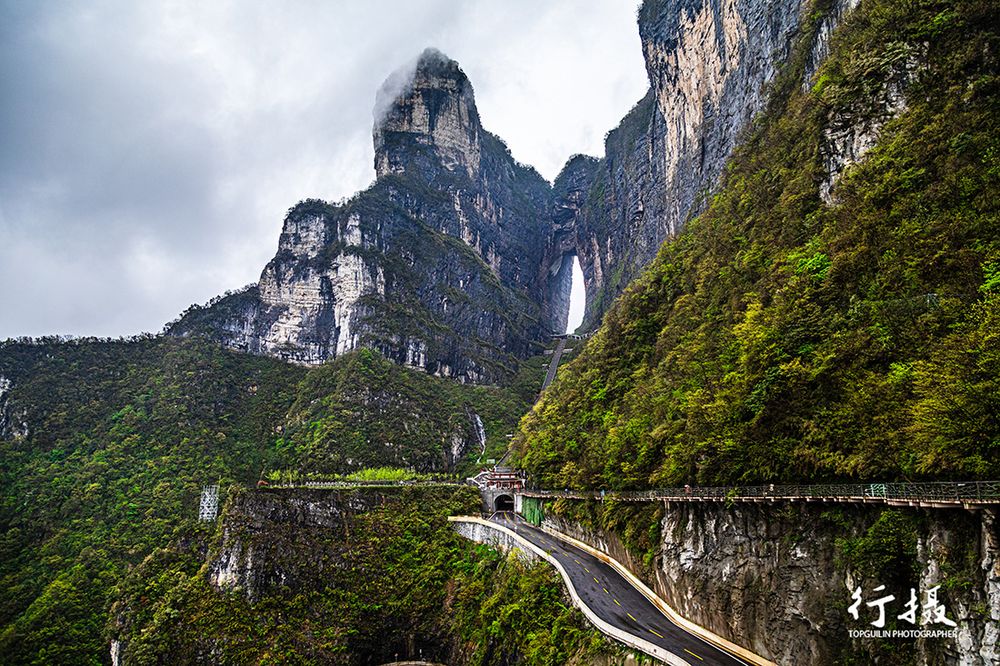
- The 99 bends from the viewing platforms. After snow or heavy rime, each hairpin is outlined in white — with a long lens, the road becomes a single white calligraphic stroke down the flank of the mountain.
- Tianmen Cave. Ice columns sometimes form at the cave mouth where meltwater refreezes overnight — rare, and worth checking with the staff before you queue.
Keeping the camera alive at −10 °C
Batteries are the real subject of a rime shoot. Carry three, keep spares in inner pockets against your body, and swap the moment the percentage starts diving — cold batteries recover when warmed. Other field notes from many frozen mornings:
- Beware condensation. Put the camera in a sealed bag before entering warm buildings; let it reach room temperature before opening. Never breathe on the viewfinder.
- Expose for the white. Rime fools meters into underexposing — check the histogram and push until the ice sits bright but the blinking warnings stay quiet (+0.7 to +1.3 EV is typical on overcast days).
- Overcast is your friend. Flat grey light renders the ice as sculpture. Sunlight is dramatic but melts your subject while you shoot it.
- Thin gloves with grip, plus chemical hand warmers in both pockets. Fingers that can't feel buttons miss the frame.
Go with someone who watched the forecast
Winter rime trips are a forecasting game more than a fitness game — the summit can be bare on Tuesday and unrecognisable on Thursday. We track summit temperature, humidity and wind daily through the season and move tour days flexibly around the formation windows. If rime is on your list, tell us your travel month and we'll tell you honestly what the odds are like.
